Breastfeeding with an ADHD brain can feel like a lot.
Author: Laurene
Your body is recovering. Your baby needs you. And your brain is doing ten things at once — none of them in a straight line.
When I birthed our first son, I didn’t know I was AuDHD. I went into motherhood thinking the hardest part would be the birth — the pain people warned you about — or the sleepless nights that followed.
But it wasn’t.
The hardest thing was feeding him.
Or rather, trying to.
The constant feeding. The constant hunger. The endless advice.
This position. That position. Keep going. Keep trying.
Nothing worked.
Feeding a baby takes energy. Healing after birth takes energy. And when your brain already struggles with remembering, planning, noticing hunger, or stopping once you’re in hyperfocus… feeding yourself can quietly slide to the bottom of the list.
He was always hungry.
And I was completely depleted.
I remember blacking out when he latched — moments where everything would fade. I was told my blood sugar might be low, so I lived on chocolate bars through the night just to get through. Not for comfort. For survival. Anything to stop myself disappearing.
Because that’s what it felt like.
I wasn’t just tired.
I was fading.
You might forget to eat until you feel shaky.
You might live on coffee because it’s easy.
You might open the fridge, feel overwhelmed, and close it again.
You might eat the same thing every day because it feels safe.
None of that means you’re doing this wrong.
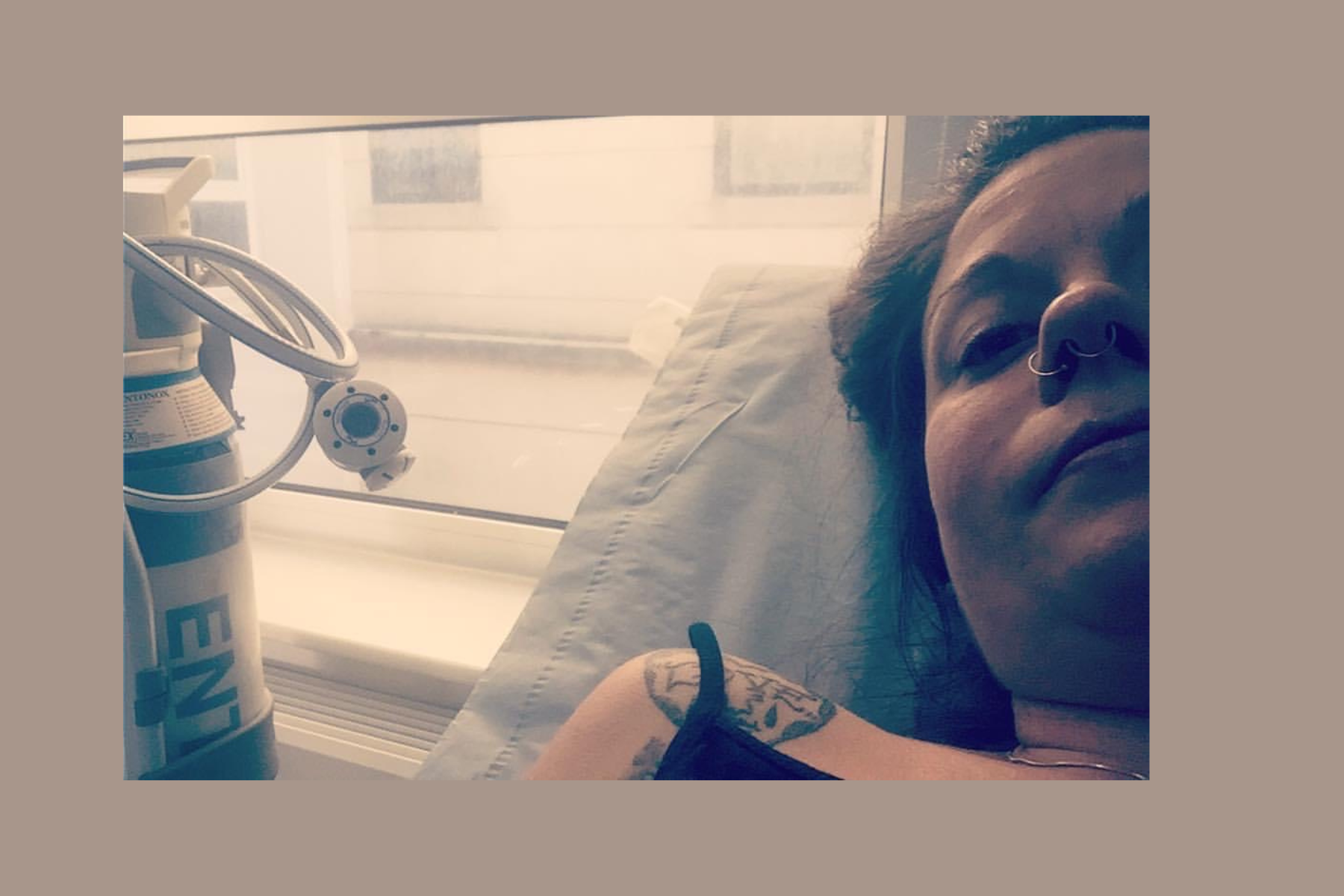
At the Hospital having my Megatron Boob drained
ADHD brains burn a lot of fuel. Breastfeeding bodies do too. When those two meet, it can feel harder to think clearly, regulate emotions, or feel steady — especially if your blood sugar dips or you’ve gone hours without real food or water.
After two rounds of antibiotics for mastitis — and no one properly looking at my painful breast — I took myself to A&E one night. I was given liquid morphine right there on the waiting room floor. When the doctor finally called me in, I didn’t even sit down. I flashed him my boobs on the spot. One of them I’d nicknamed Megatron by that point.
He looked startled.
Then told me I had a breast abscess.
Seven rounds of draining later, I was told I could return to breastfeeding.
I said, “No thanks.”
And then came the guilt.
Years of it.
Every health visitor visit.
Every midwife.
Every well-meaning mum.
“But why not try again?”
There were no words to soothe them.
And honestly — there were none to soothe me either.
This isn’t about trying harder.
It never was.
It’s about making nourishment easier.
Not perfect meals.
Not rules.
Just support that fits how your brain works.
Snacks where you feed the baby.
Meals you don’t have to think about.
Carbs with protein so you don’t crash.
Water bottles everywhere — not just in the kitchen.
Doing the same thing every day because it helps.
Your brain isn’t the problem.
It’s doing its best while keeping a tiny human alive.
It wasn’t until after my diagnosis — and Keao’s — that I started putting the pieces together. That this wasn’t a failure. It was an experience shaped by an unsupported, unseen neurodivergent body and brain.
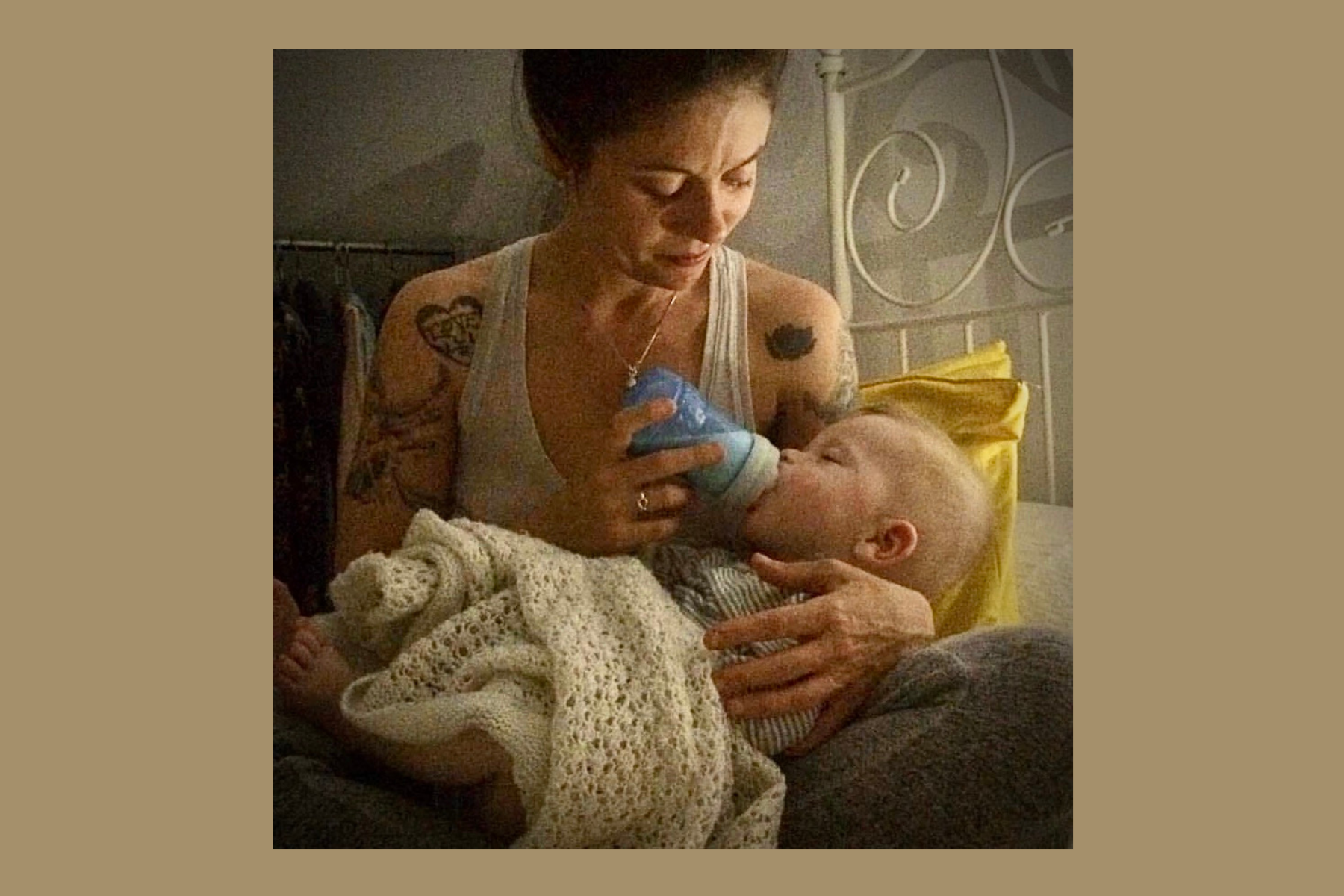
Me feeding Keao after all the drains, the tears, the guilt…..
When we had Luca, everything changed.
Not because my body magically worked differently — but because I had knowledge. Options. Language. Permission.
I understood my limits.
I understood my nervous system.
I understood that feeding a baby should not cost you your sense of self.
And I made peace with that first experience.
Because that’s all it was.
An experience — shaped by what I didn’t know at the time.
It did not define me as a mother.
And it never did.
If you’re reading this in the quiet, half-lit hours — you’re not alone.
And just like your baby, you deserve to be fed gently, consistently, and without guilt. 💛